Things to Do in Atlanta for 2026
Atlanta rewards people who actually pay attention to it — here's where to start in 2026.
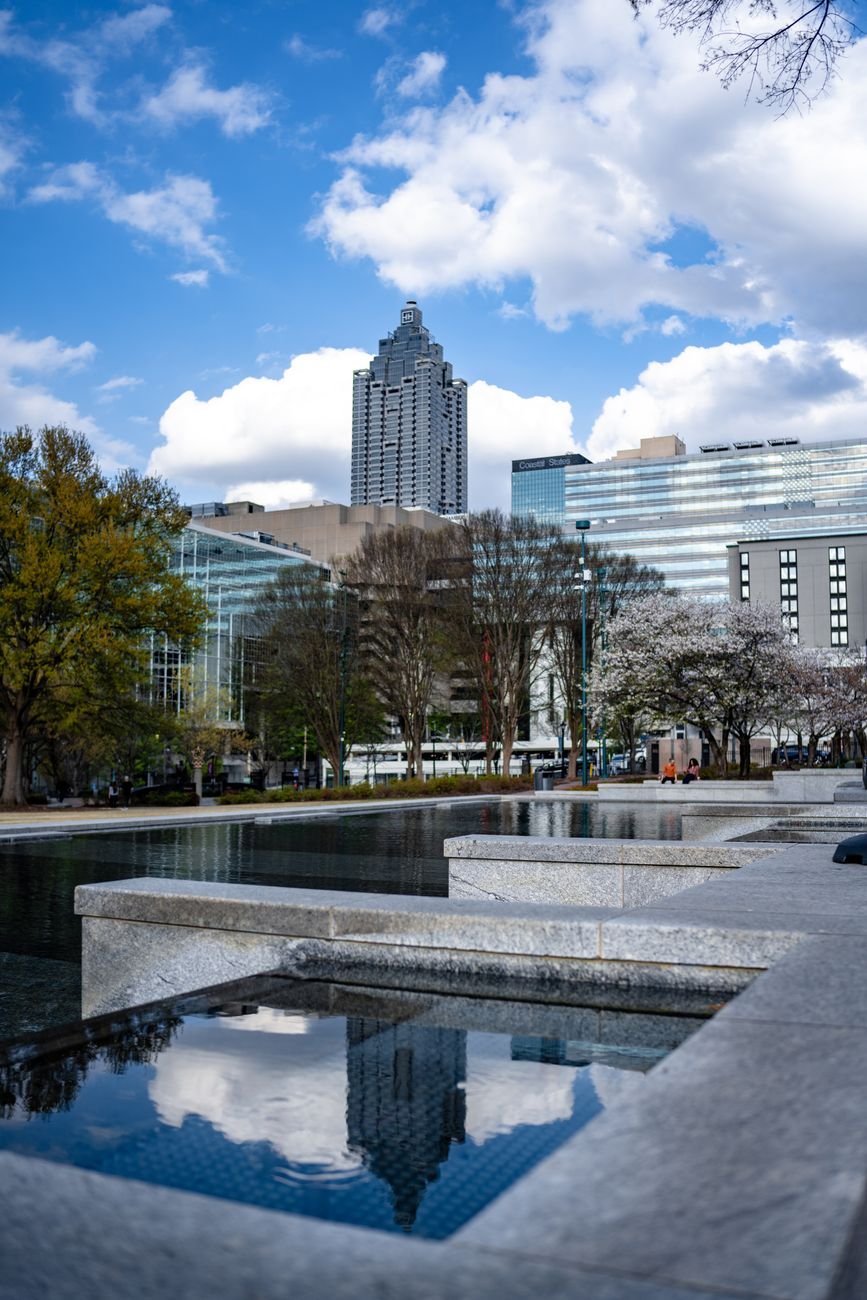
On a Saturday morning in the Old Fourth Ward, the line outside a fried chicken spot on Edgewood snakes past a mural of John Lewis, and nobody thinks that's strange. That's just Atlanta operating normally, history and present tense pressed together, the sacred and the secular sharing a block. The city doesn't organize itself around visitors' expectations, which is what makes it worth visiting. If you've been handed a generic Atlanta itinerary before, you already know how flat it falls. The things to do in Atlanta that actually stick are the ones that meet the place on its own terms: specific, earned, and connected to something that runs deeper than a press release.
The Best Things to Do in Atlanta: Start Here
Most first-time visitors orient around downtown and Midtown, which makes geographic sense but misses the neighborhoods where the city's actual character lives. The rough division Atlantans use is ITP (inside the perimeter of I-285) versus OTP (outside it), and while both have their claims, the cultural gravity pulls ITP, toward Old Fourth Ward, Inman Park, West End, Kirkwood, Midtown, and Decatur. That's where this guide starts.
ITP Anchors: The Experiences That Define the City
The Atlanta BeltLine Eastside Trail
The BeltLine is the most consequential infrastructure project Atlanta has undertaken in decades, and the Eastside Trail is its most-walked stretch, a converted rail corridor that links Inman Park to Ponce City Market and continues north and south through the city's most in-demand neighborhoods. The trail is lined with rotating public art, food truck clusters, patios you can reach on foot, and the kind of spontaneous neighborhood energy that no developer can fully engineer even when they're clearly trying. Walk it on a weekday morning and it belongs to joggers and dog owners. On a weekend afternoon it becomes a full civic event: families, cyclists, skateboarders, couples making slow progress because every fifty feet there's something worth stopping for. The trail itself is free. What costs you is the irresistible pull of every patio it passes.
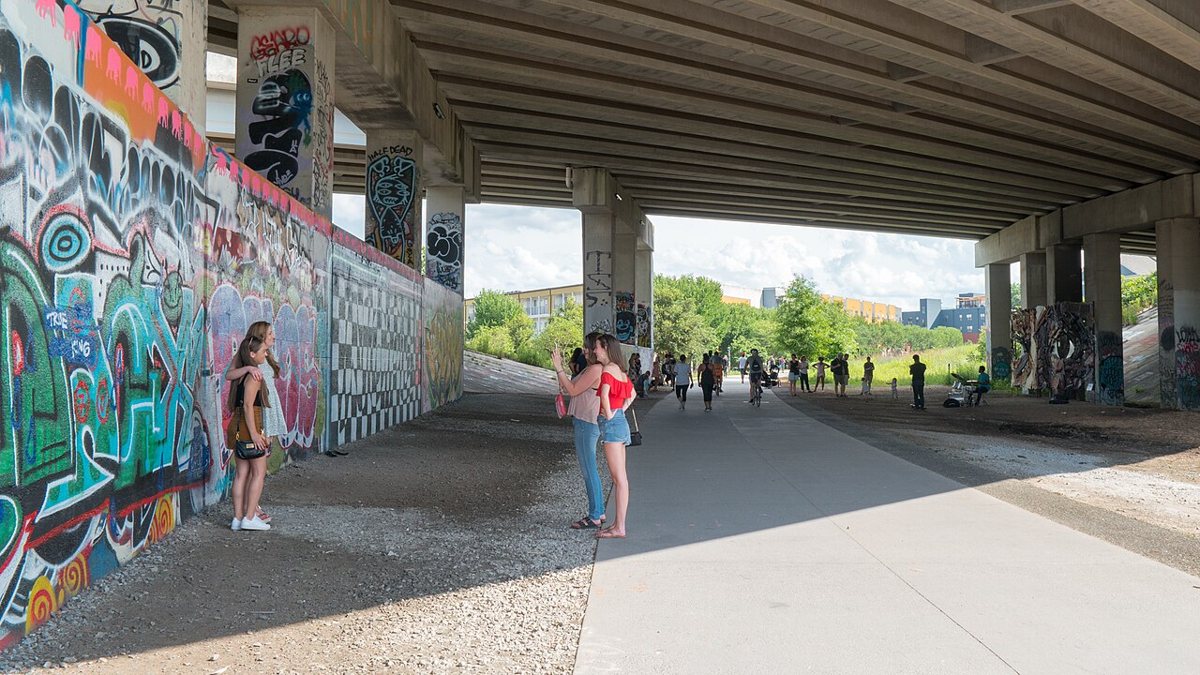

Insider read: the art installations change on a rolling basis. The wall murals along Krog Street and the painted overpasses throughout have been photographed millions of times and repainted dozens. Come back every few months and you'll see something genuinely new. The BeltLine's public art program commissions actual artists, not corporate decoration.
Ponce City Market
The old Sears distribution warehouse at North Avenue and Ponce de Leon has been a lot of things to Atlanta over a century, a regional distribution hub, a city government building, a derelict shell the neighborhood argued about for years. Its current incarnation as Ponce City Market is the most alive it's ever been. The food hall on the ground floor draws serious debate among people who care about such things: the rooftop mini-golf and carnival rides attract a different crowd than the local vendors inside, and both groups coexist without much friction. The market anchors the BeltLine's northern end and is surrounded by the kind of neighborhood density that makes it worth an unhurried afternoon rather than a quick pass-through. The interior food hall sources from Georgia producers and functions as a legitimate meal destination in its own right, not just a shopping-mall food court with better lighting.
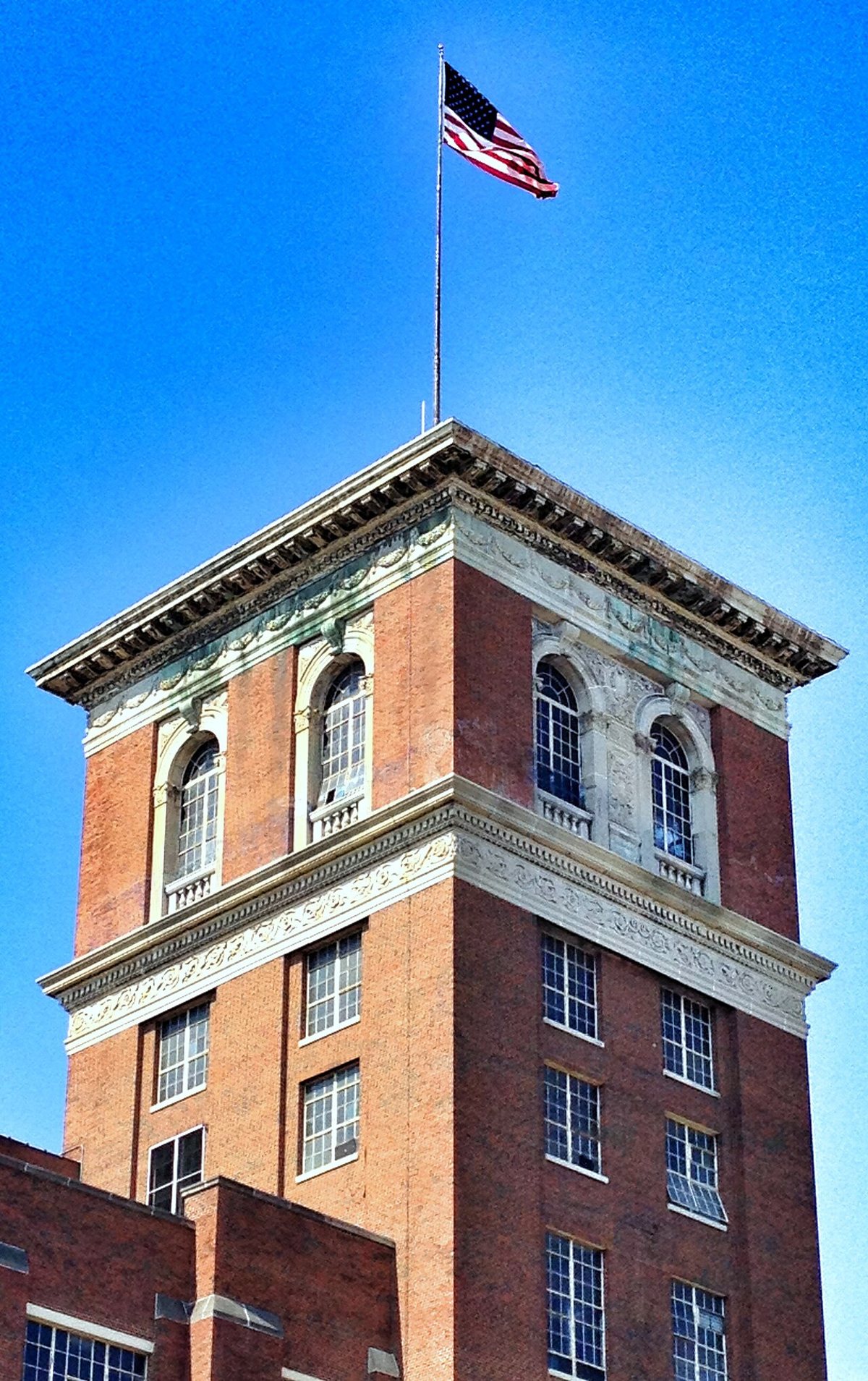

The rooftop, Skyline Park, charges admission and has a retro carnival aesthetic that photographs better than it sounds. Go at dusk when the Midtown skyline earns its backdrop status. The building's history is well-documented in placards throughout if you're the type to read them; if you're not, the architecture communicates it anyway.
Krog Street Market and the Krog Street Tunnel
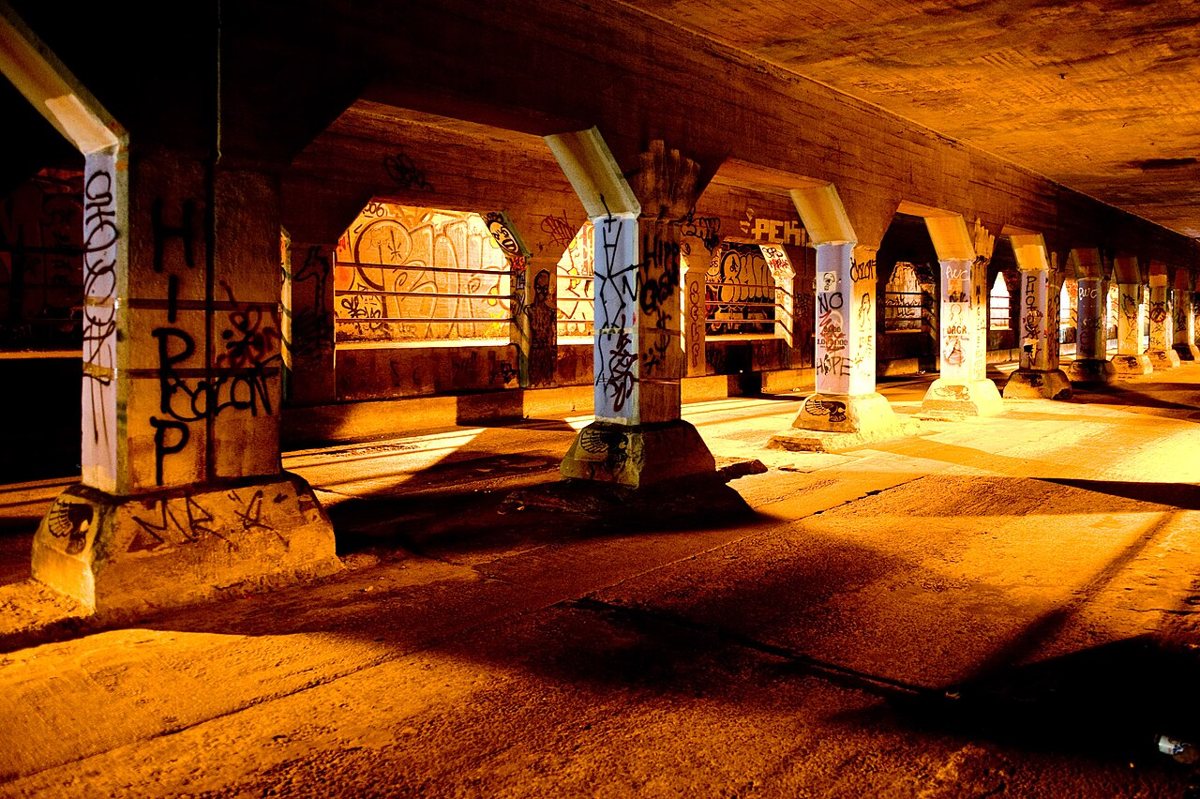
A few blocks south of Ponce, Krog Street Market operates on a smaller, more neighborhood-focused scale, fewer tourists, more regulars who walked from adjacent blocks. But the tunnel underneath the railroad tracks connecting Inman Park to Cabbagetown is the real destination. It's been Atlanta's unofficial public art gallery for years, covered in layers of spray-painted murals that the city has stopped trying to regulate. Wedding parties shoot portraits there on weekend mornings. Skateboarders cut through it on the way to somewhere else. Artists paint over existing work with no ceremony. Everyone claims a version of the tunnel that no longer exists, which is part of the point. The market beside it hosts a rotating mix of food vendors and permanent tenants, including several cocktail-serious bars, with a terrace that gets genuinely crowded on warm evenings and stays worth it anyway.

Civil Rights Heritage: Substance Over Spectacle
Martin Luther King Jr. National Historical Park
Auburn Avenue is where the civil rights movement was lived before it was commemorated. The Martin Luther King Jr. National Historical Park encompasses the block where King was born, Ebenezer Baptist Church where he and his father both preached for decades, and the King Center, which holds his tomb and archives. These are not museum recreations built for visitor throughput. Ebenezer is still an active congregation that has been holding services since 1886. The houses on the block where King grew up are real houses where real families made real lives. The National Park Service runs ranger-led programs that go well beyond the biographical basics, placing the movement in the economic and political conditions of mid-century Atlanta, a city that was simultaneously one of the most prosperous Black economic environments in the country and one where the legal scaffolding of segregation touched every aspect of daily life.
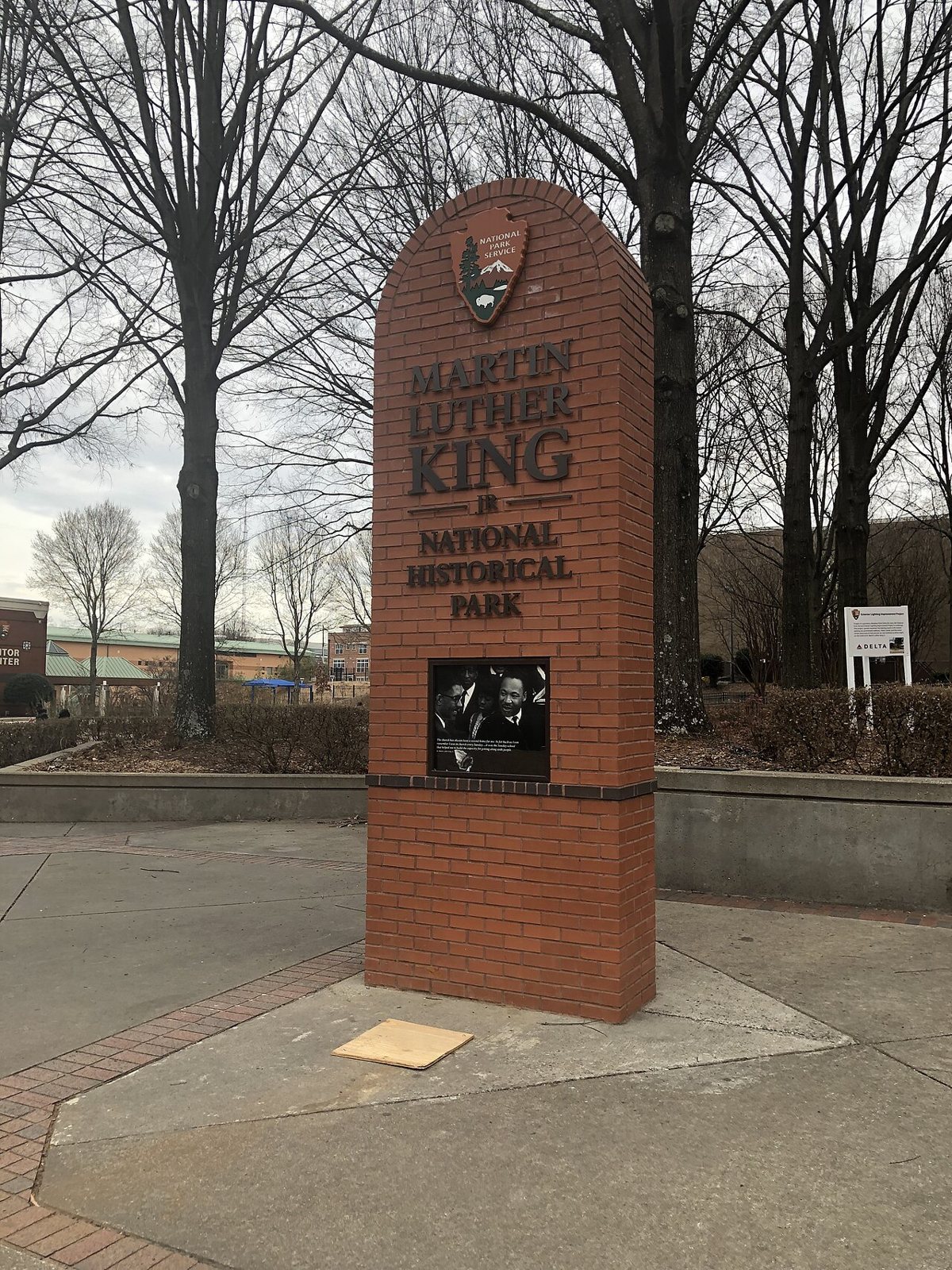

Plan to walk Auburn Avenue end to end, past the Herndon Building and the offices that housed Atlanta's Black professional class at a time when that required daily defiance of enormous legal and social pressure. The park is free. The King Center is free. The crowds are lighter on weekday mornings. This is not a place to rush through in ninety minutes between other stops.
National Center for Civil and Human Rights
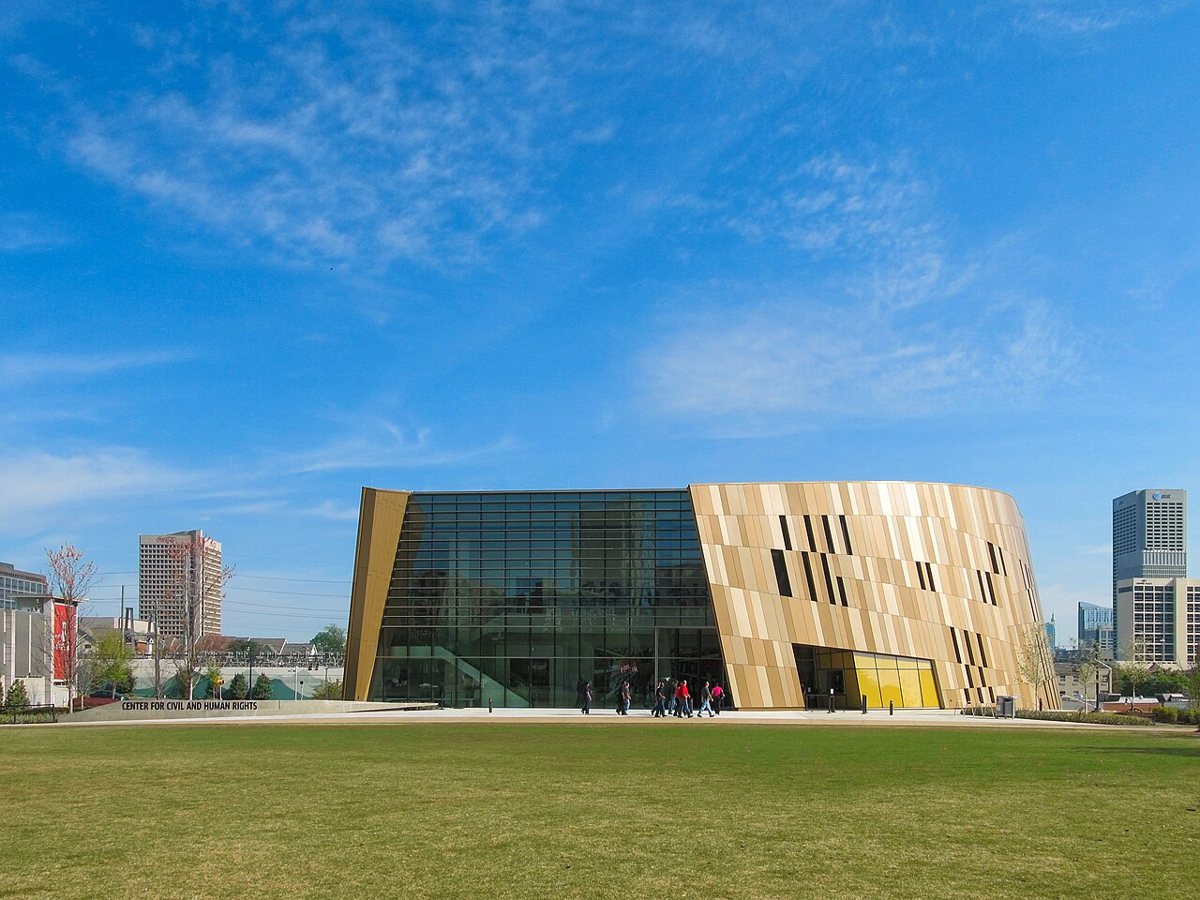
Downtown, adjacent to Centennial Olympic Park, the National Center for Civil and Human Rights makes a deliberate argument: that the American civil rights movement and the global human rights movement belong in the same analytical frame, not in separate buildings. The permanent collection includes papers, photographs, and objects from the King estate alongside international documentation of human rights struggles from Argentina to South Africa to Southeast Asia. The lunch counter simulation, where visitors sit at a replica of a segregated lunch counter and hear audio of the harassment civil rights protesters endured while attempting not to react, remains one of the most viscerally effective museum installations in the city. Budget two honest hours. The building design by Philip Freelon, who also designed the National Museum of African American History and Culture in Washington, deserves attention in its own right: the way it manages light and the relationship between interior and exterior is doing real work.

Midtown: The Culture District
The High Museum of Art
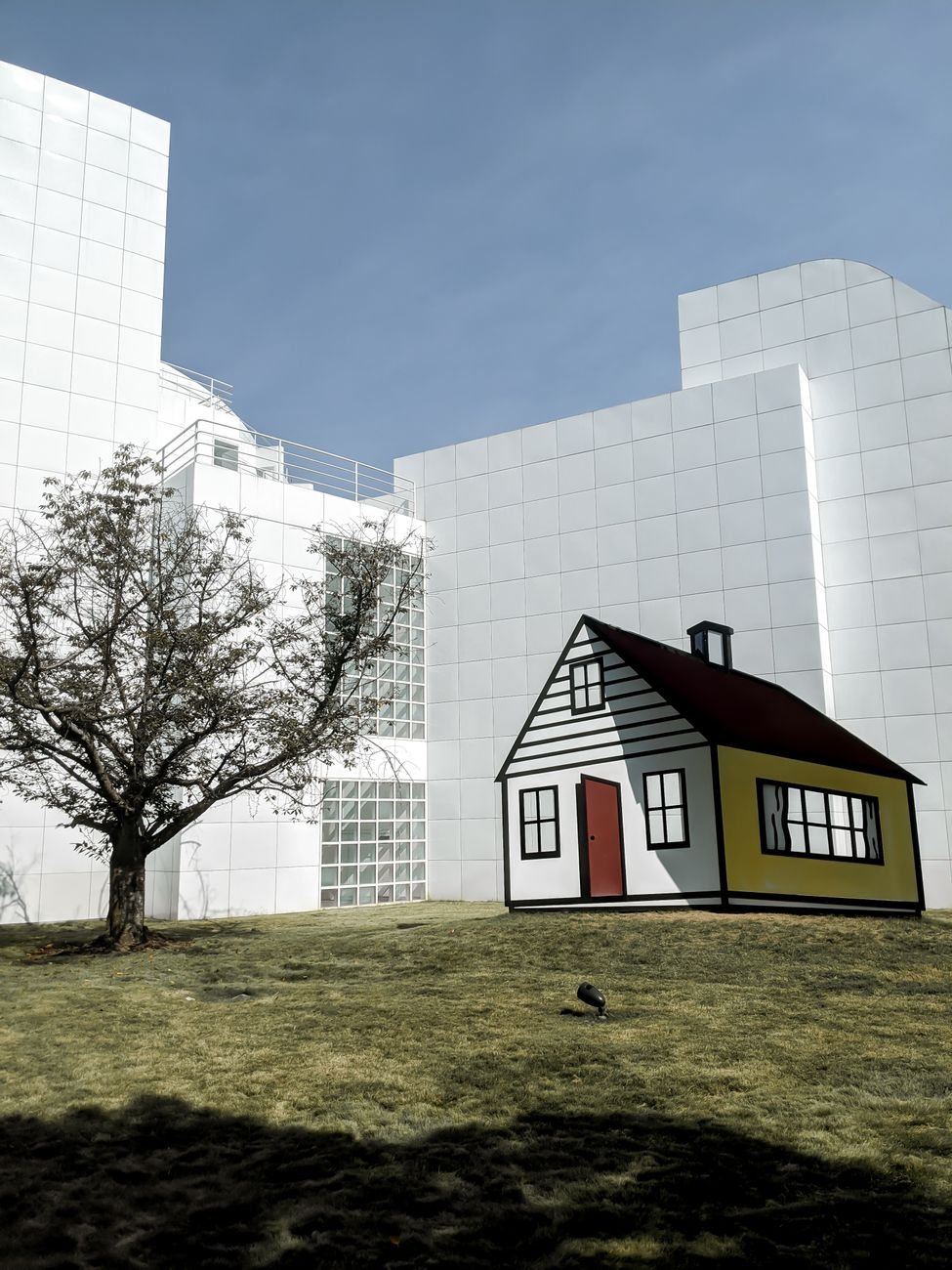
The High Museum of Art on Peachtree Street is the Southeast's largest art museum, and its African American art collection is among the most significant held by any regional institution in the country. Work by Kara Walker, Kehinde Wiley, Barkley Hendricks, Alma Thomas (a Georgia native), and others makes the case that Atlanta's place in American art history goes well beyond what the survey textbooks have traditionally emphasized. The building, designed by Richard Meier in 1983 and expanded by Renzo Piano in 2005, earns its architectural reputation through the way natural light moves through its atrium spaces throughout the day. The permanent collection runs deeper than most first-time visitors expect; the traveling exhibitions tend to draw the press attention, but the collection galleries reward repeat visits in a way that major traveling shows rarely do. The Midtown neighborhood around the museum has enough restaurants and bars within a ten-minute walk to make a full afternoon-into-evening without doubling back or driving anywhere.
The Fox Theatre
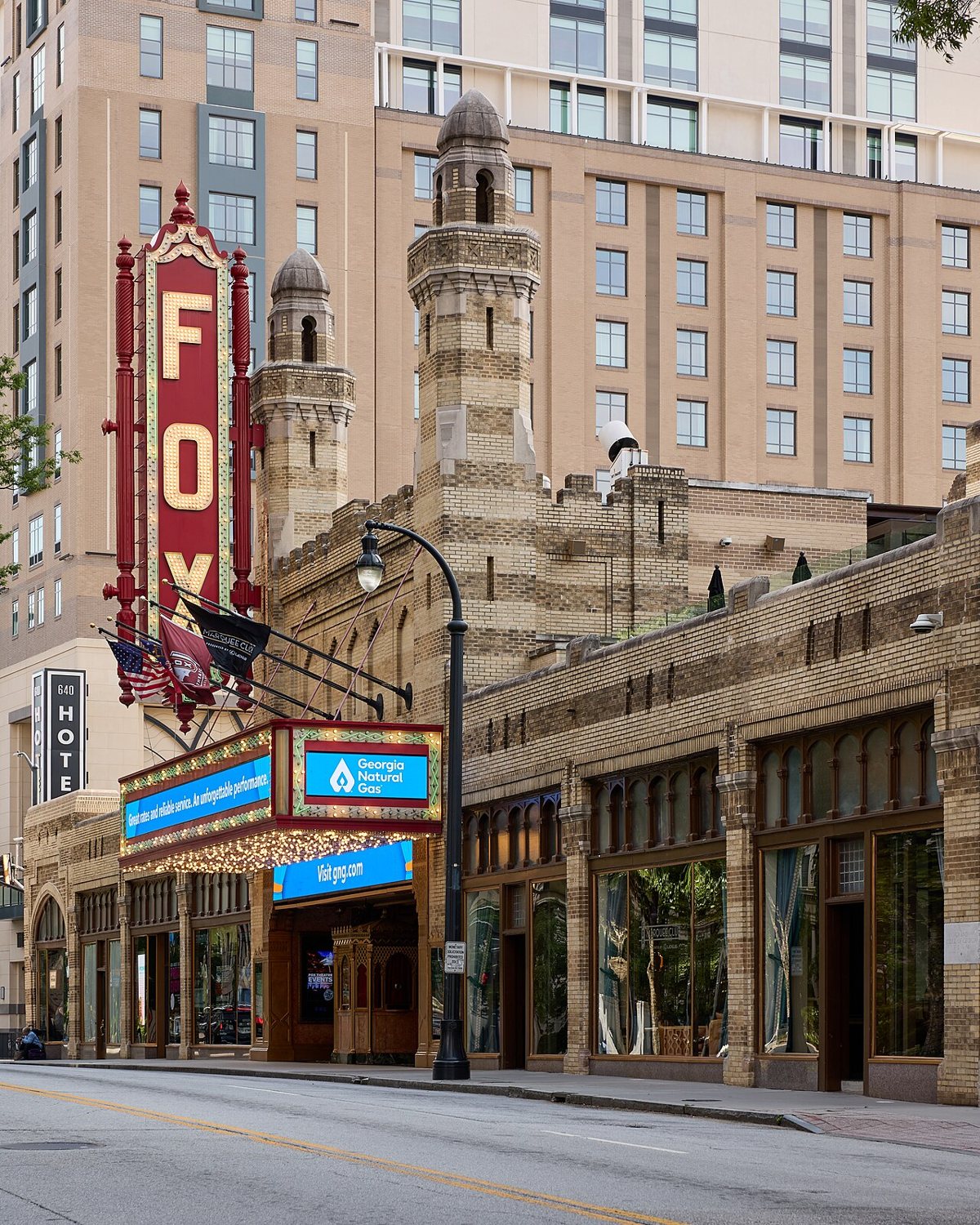
The Fox Theatre on Peachtree Street opened in 1929 as a movie palace and has survived several serious attempts to demolish it, which is Atlanta's significant good fortune. The interior is an eccentric Moorish-Egyptian fantasy: the main auditorium ceiling is painted to look like a night sky, with what appears to be moving clouds and actual twinkling star effects, and the surrounding architecture commits to its minarets, scimitars, and decorative excess with a conviction that the 1920s could pull off and the present day mostly cannot. The Fox hosts Broadway touring productions, concerts from a wide range of genres, film screenings, and other events year-round. Even if the particular show is forgettable, sitting in that room is not. Guided tours of the building run periodically and access the organ loft, the backstage spaces, and the basement theater that most audiences never see. The Fox is a legitimate piece of American architectural history that happens to still be used for its original purpose.

Piedmont Park
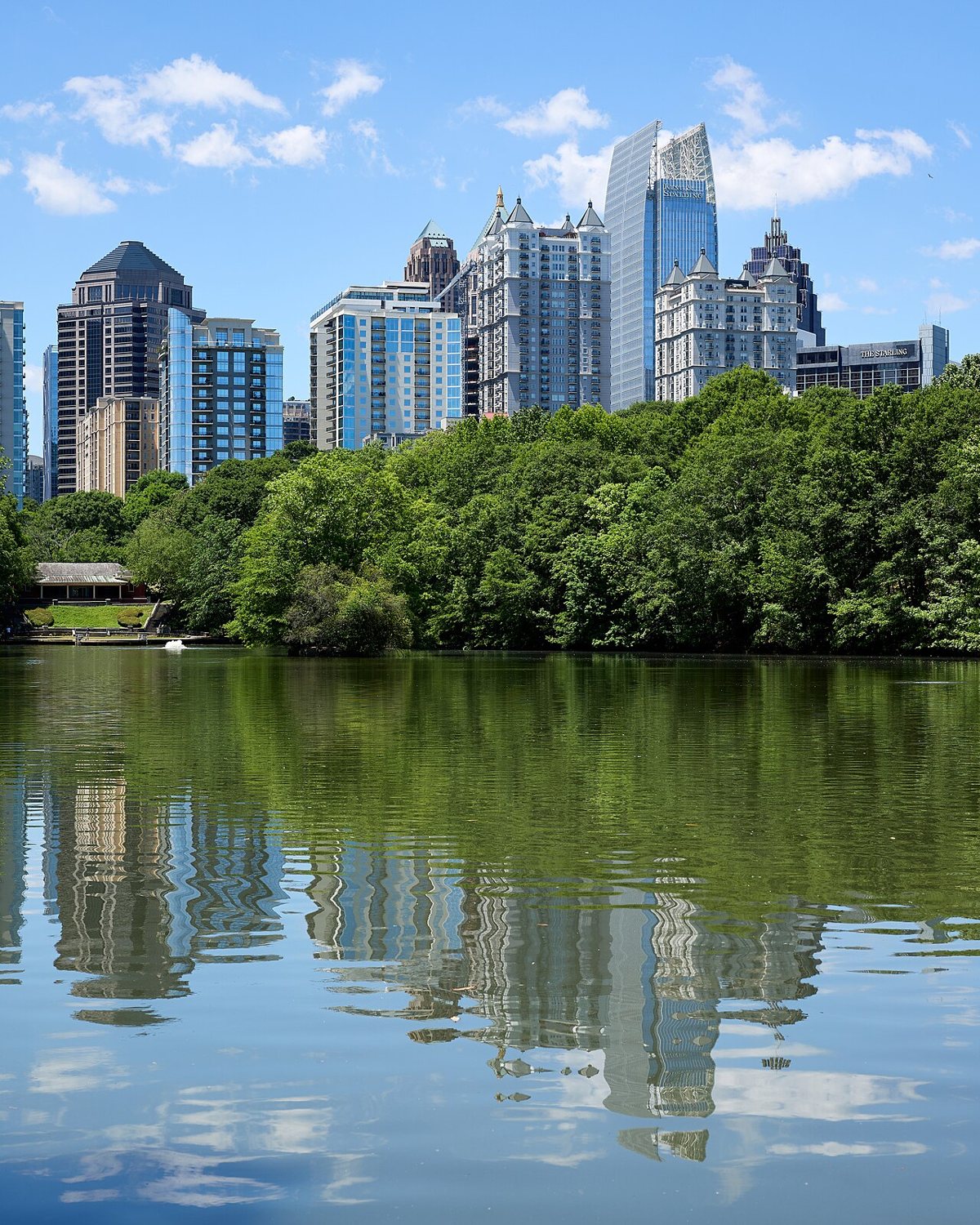
Piedmont Park is Atlanta's main outdoor gathering space, 189 acres in Midtown that have absorbed more civic life over more decades than any comparable green space in the city. The park hosts the weekend farmers market, political gatherings, summer concert series, pickup soccer that has been ongoing at the same fields for thirty years, and long Sunday afternoons that function as something close to a civic ritual for the neighborhoods around it. The park borders the Atlanta Botanical Garden on its northeast edge; the Garden is a separate admission with serious horticultural credentials, including a canopy walk suspended through the forest section and the Fuqua Orchid Center, which maintains a collection with real depth. The view of the Midtown skyline from the park's great lawn is one of the city's genuinely strong visual compositions. Running and cycling paths connect through the park to the BeltLine's northern spur, which means you can enter at Piedmont Park and end up in Inman Park without touching a car.

West Side and Historic Neighborhoods
West End and the Westside BeltLine
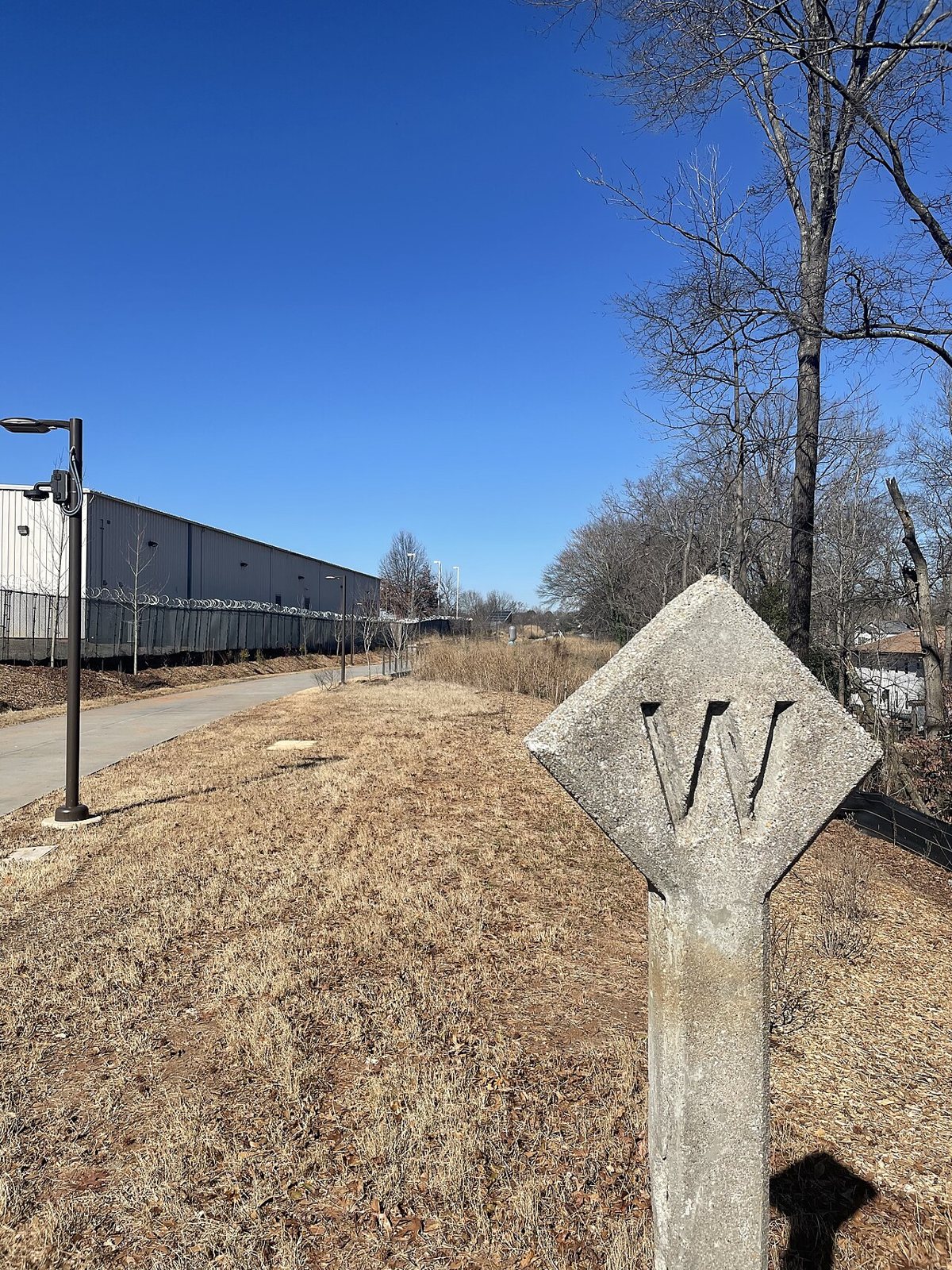
West End is one of Atlanta's oldest neighborhoods and has been a center of Black Atlanta life and culture for well over a century. The Atlanta University Center (Morehouse, Spelman, Clark Atlanta, and their affiliated institutions) sits nearby and gives the area an intellectual and cultural anchor unlike anywhere else in the city. The Westside Trail of the BeltLine has brought new foot traffic and investment into West End, which means the neighborhood is currently in the middle of a complicated negotiation between longtime residents and the development pressures that reliably follow major infrastructure. What that produces for visitors, right now, is a neighborhood with real texture: murals commissioned by Black Atlanta artists, the historic West End commercial district, soul food restaurants that haven't been discovered by national food media, and the Wren's Nest, the Victorian home of Joel Chandler Harris, which the surrounding community has worked actively to reclaim and contextualize beyond its complicated literary history.

Decatur
Decatur is technically its own city, with a separate government, separate school system, and a distinct civic personality. OTP visitors often mistake it for an Atlanta neighborhood; Atlanta residents treat it as an extension of ITP culture, which is more accurate. The square in downtown Decatur functions as a genuine town center, independent bookshops, restaurants that have been there long enough to have regulars who remember when they opened, bars where the bartender knows what you drink. The restaurants in Decatur tend toward serious food without the kind of pretension that makes serious food exhausting; the bar scene is unpretentious in a way that isn't sloppy. Decatur has spent decades attracting people who want to live in a real place with real neighbors, and that aspiration has produced something that functions as advertised. The MARTA rail line runs directly to the Decatur station, making it one of the easiest ITP-adjacent destinations to reach without a car.
The Big Attractions Worth Planning Around
Georgia Aquarium
The Georgia Aquarium near Centennial Olympic Park is one of the largest aquariums in the world, and it maintains quality throughout a facility that could easily rest on its size. The whale shark habitat is the signature draw: four whale sharks in a tank measured in millions of gallons, large enough that the scale takes a full minute to process when you first see it. The beluga whale section, the dolphin presentations, the coral reef exhibit, and the cold water habitats maintain the same standard throughout. Go on a weekday if the schedule allows; weekend crowds in the main galleries produce the kind of density that makes it harder to actually look at what you came to see. The facility requires real time, a quick walk-through misses most of it, and the experience improves significantly with an unhurried pace.

Atlanta History Center
The Atlanta History Center in Buckhead is easy to underestimate. It presents as a campus of historic houses on well-landscaped grounds, which it is, but the Swan House and the Smith Family Farm are architectural and social history artifacts that reward genuine engagement rather than a glance. The museum building holds what is generally recognized as the most comprehensive collection of Civil War material culture in the Southeast, uniforms, weapons, correspondence, photographs, objects that communicate the scale and character of the conflict in ways that text cannot. That sounds narrow until you consider that the Civil War is, in a direct and non-metaphorical sense, what made Atlanta what it is: Sherman burned it in 1864, and the city that rebuilt itself in the decades after developed its particular relationship with ambition, reinvention, and self-mythology specifically in response to that event. The collections on Atlanta's Black history and the city's transformation through the 20th century are less nationally celebrated than the Civil War holdings but equally substantive and arguably more directly relevant to understanding the city you're standing in.
Practical Notes for Getting Around
MARTA rail is the honest answer for moving between downtown, Midtown, Buckhead, and Decatur, those corridors are served efficiently, and downtown parking is expensive enough that the math tips toward transit. The BeltLine, however, is not served by MARTA rail; you walk, run, or bike it. The intown neighborhoods (Old Fourth Ward, Inman Park, Kirkwood, Cabbagetown, East Atlanta Village) are walkable between themselves but require a car or rideshare to connect to downtown or Midtown without a long walk.
- Free or low-cost: the BeltLine trail, Piedmont Park, the MLK National Historical Park, most of Auburn Avenue's historic streetscape, the Krog Street Tunnel
- Paid but worth planning around: the High Museum, the Georgia Aquarium, the Atlanta Botanical Garden, the National Center for Civil and Human Rights, the Atlanta History Center
- Morning timing pays off at the MLK Historic District and the Georgia Aquarium; late afternoons belong to the BeltLine and Ponce City Market
- The Fox Theatre and the Centennial Olympic Park area come into their own after dark
- Waffle House is open 24 hours; this is relevant information at multiple points in any Atlanta itinerary
For a deeper read on how Atlanta's food culture connects to its neighborhoods, Atlanta's restaurant scene covers most of the same geography. If you're planning around a specific part of the city, Atlanta's neighborhood breakdown gives you the ITP/OTP context before you commit to a base.
A Point of View
Atlanta is a city that has been through enough to have opinions about itself. The MLK Historic District is not a theme park. The BeltLine is not finished, and the politics of who benefits from its completion are genuinely contested. West End is not a backdrop. The civil rights history that visitors encounter on Auburn Avenue is not ancient, it happened within the living memory of people who still live in this city, and the institutions built in response to that history are still doing their work. None of that is grim context meant to qualify the experience; it's what makes Atlanta worth serious attention rather than a weekend of checking boxes.
Waffle House, when the time comes (and it will come, late at night or early in the morning or both, because there are more than a hundred locations inside the perimeter), is a genuine institution. The scattered, smothered, and covered hash browns are not ironic. The counters where lawyers and construction workers and nurses coming off shift sit next to each other at 3 a.m. are doing something real. Atlanta rewards the curious and punishes the rushed. Give it actual time and it returns something specific, something that doesn't look like anywhere else.